
Iron & Sulfur Removal in Fishers, IN
Orange staining in the toilet tank and a rotten-egg smell at the hot tap are different problems with a shared cause, and both have a proper fix.
Three Kinds of Iron, Three Different Answers
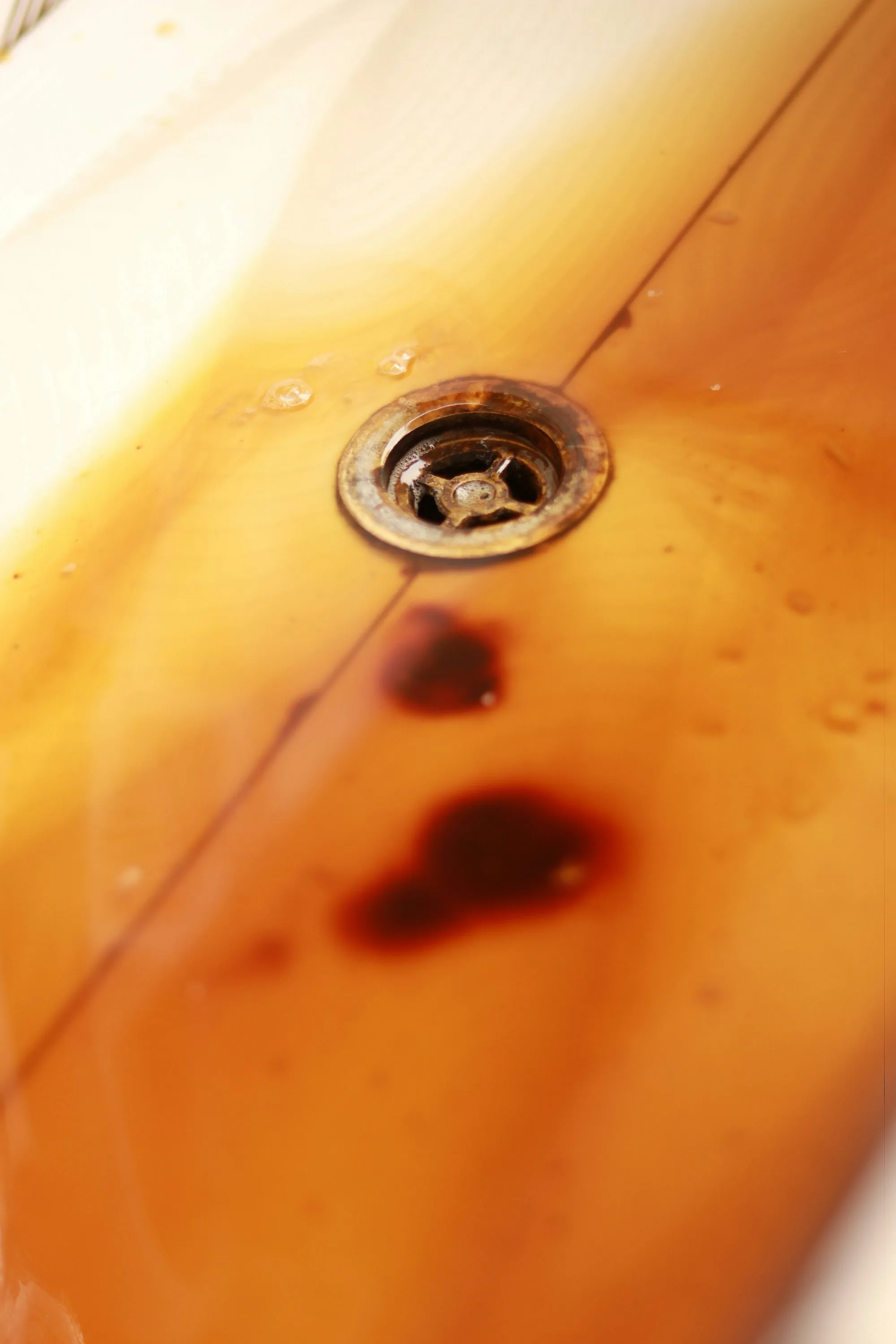
Iron in water does not behave as one thing. Ferrous iron is dissolved and invisible — the water comes out of the tap clear and turns orange in the bowl or the bath over the next few hours as it meets the air and oxidizes. Ferric iron is already oxidized when it arrives, so the water looks rusty from the moment it leaves the tap. Iron bacteria produce a reddish slime in toilet tanks and a smell that people often mistake for sulfur. Each needs a different treatment, and the test tells us which one, or which combination, you are dealing with.
Sulfur, properly hydrogen sulfide, is the rotten-egg smell. If it is at every tap it is in the supply. If it is only at the hot taps it is very often the magnesium anode rod in the water heater reacting with sulfates in the water, and the fix is a different anode rod rather than a treatment system — which is a much shorter conversation and a much smaller bill. We check that before quoting anything bigger.
Iron is also the single most destructive thing for a water softener. Softener resin will remove modest amounts of ferrous iron, which is why some installers lean on it, but it fouls the bed steadily until the softener stops softening. A great many of the dead softeners we are called to look at in this county died of iron that should have been removed upstream.
What the Treatment Involves
The right process depends on the form, the concentration and the pH of the water it is in.
-
Iron speciation, not just a total number
Ferrous versus ferric versus bacterial, plus manganese, plus pH — because oxidizing media need a pH range to work in and low-pH well water has to be corrected first.
-
Air injection oxidation where it suits
A pocket of air in the top of the tank oxidizes dissolved iron as the water passes through, and the media filters the resulting particles. No chemicals to buy or refill.
-
Oxidizing media filters
Catalytic media that oxidizes and traps iron, manganese and hydrogen sulfide in one bed, backwashing on a schedule we set to your water rather than the factory default.
-
Chemical feed for heavy loads and bacteria
Where iron is high or iron bacteria are present, a metered chlorine or peroxide feed with contact time and a carbon stage behind it to remove the residual.
-
Anode rod checked before systems are quoted
If the smell is hot-side only, we look at the water heater anode first. It is frequently the whole answer and it costs a fraction of a treatment system.
-
Softener protected or rehabilitated
Iron treated upstream, and where the resin is already fouled, cleaned with an iron-removing resin treatment or re-bedded rather than replacing the unit.
How We Work It Out
We test, and we test for the form
A total iron number alone will not design a system. We identify what form it is in and what the pH is before recommending anything.
We check the easy explanations first
Hot-side-only sulfur, a failing anode rod, a stagnant water heater. These get ruled in or out before any tank is quoted.
We size the oxidation and the bed
Concentration and flow set the media volume and the backwash rate. Undersized iron filters break through and stain again within months.
Install and break-in
The bed is loaded, rinsed and backwashed, the control valve is programmed, and the system is run in before we hand it over.
We check the staining is actually gone
A follow-up after a few weeks, because iron is one of the few treatments where the proof is in the toilet tank rather than a test strip.
Why Iron Jobs Go Wrong
The form was never identified
Media chosen against a total-iron figure will miss bacterial iron entirely and leave the slime and the smell exactly where they were.
pH was out of range for the media
Most oxidizing media need a pH above a threshold to work. On acidic well water, neutralization has to come first or the filter underperforms from day one.
The softener was asked to do it
Resin removes some iron and is destroyed by doing so. Iron belongs upstream, in a filter built for it.
On every job of this kind
- Iron form identified before design
- Water heater anode checked first on hot-side odor
- pH corrected where media require it
- Follow-up visit to confirm staining is gone
Put an End to the Orange and the Smell
(317) 743-2115Rust staining and sulfur odor are both solvable, and the fix is often smaller than people fear. Call and describe what you are seeing and smelling, and we will come test the water and tell you what form of iron you are actually fighting.
Free water test with every estimate. Written scope before anything is installed.